Categories
Books

Booking Experience

In the dynamic world of hospitality, creating a compelling online listing can make all the difference in attracting and retaining guests. Booking Experience offers a comprehensive guide to understanding how various listing attributes-such as pictures, colors, host photos, and more-influence guest perceptions and booking decisions on platforms like Airbnb, Booking.com, or Vrbo. The book delves into the science behind guest experience, providing practical insights into measuring and optimizing these attributes through experimental design, surveys, and data visualization. Ideal for property owners, managers, and hospitality professionals, this book equips readers with the knowledge and tools to enhance listings, boost guest satisfaction, and stay competitive in an ever-evolving market.

Categories
News

Exploring the Nature of Human Experiences through Events and Data

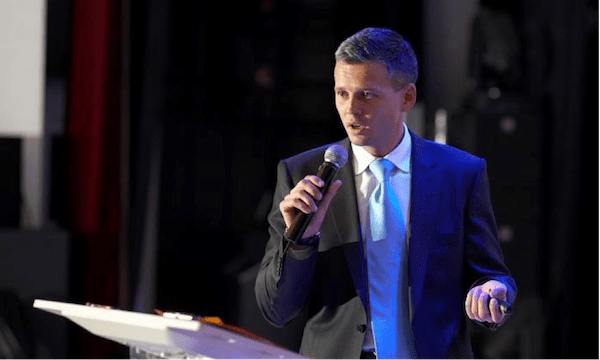
Maksim Godovykh, chair of the MPI Research Advisory Board, emphasizes the importance of integrating extensive research into the event planning process to better understand how people think, feel, and behave during live experiences. He believes that research-driven planning helps event professionals move beyond assumptions and intuition, allowing them to design experiences that are more engaging, meaningful, and effective for diverse audiences.

Dr. Godovykh’s perspective is grounded in his extensive background in designing and managing major international events, where he closely observed attendee behavior and decision-making. This practical experience, combined with his academic training in cognitive neuroscience, behavioral economics, and psychophysiology, enables him to bridge the gap between theory and practice.

Through his leadership at MPI and ongoing international research projects, Godovykh advocates for embedding research into every stage of the event lifecycle—from concept development to evaluation. He sees this approach as essential for increasing the value events deliver to participants, partners, and destinations, while positioning the industry as innovative, evidence-based, and socially responsible.

Read more: https://www.themeetingprofessionaldigital.org/themeetingprofessional/library/item/june_2023/4111624/

Categories
Books

Measuring the Impacts of Tourism

Tourism is a powerful driver of economic growth, providing significant revenues, employment opportunities, and investments to destination communities worldwide. However, the presence of tourists also brings profound social, cultural, environmental, and psychological impacts on local communities. The book explores these multifaceted effects and introduces methods, measurement tools, and management practices necessary for sustainable tourism development. The book emphasizes the importance of understanding and addressing the social and psychological impacts of tourism to ensure its long-term sustainability. It provides a comprehensive evaluation of tourism’s economic, political, social, and environmental dimensions, offering new metrics and strategies for creating balanced and sustainable tourism practices. This essential resource is aimed at students, tourism practitioners, destination managers, and government authorities, providing insights and recommendations to improve the quality of life, health, and well-being of residents in tourist destinations worldwide.

Categories
News

Special Issue on Sustainable Tourism

Dr. Maksim Godovykh is the editor of the special issue Sustainable Tourism: The Impacts of Tourism Development on Destination Communities, published in the peer-reviewed journal Sustainability. The special issue addresses one of the most critical challenges in contemporary tourism research and practice: understanding and managing the complex effects of tourism development on host communities.

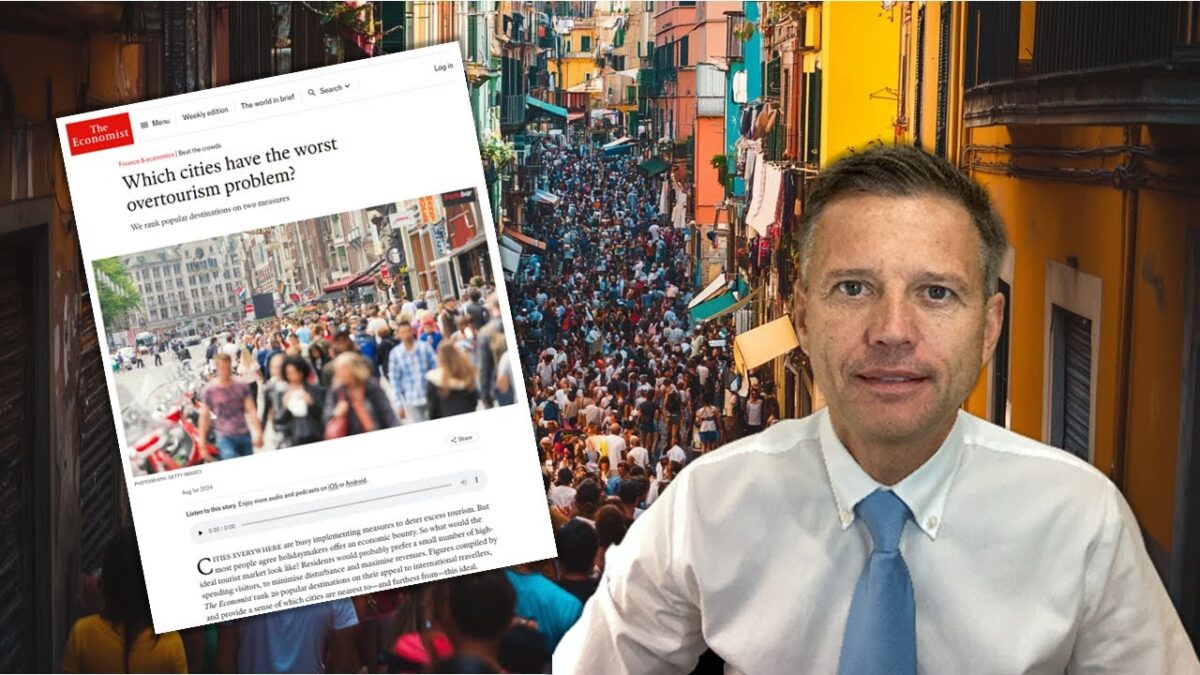
The special issue will focus on how tourism influences destination communities across economic, social, cultural, environmental, and psychological dimensions. It brings together international research that moves beyond traditional performance indicators, such as visitor numbers and revenue, to examine residents’ quality of life, perceptions, and overall well-being in tourism destinations.

Under Dr. Godovykh’s editorial leadership, the special issue promotes evidence-based and community-centered approaches to tourism planning and policy-making. By showcasing interdisciplinary perspectives and global case studies, it aims to support more inclusive, sustainable, and resilient models of tourism development that balance industry growth with the long-term interests of destination communities.

Read more: https://www.mdpi.com/journal/sustainability/special_issues/L32Y3635Z1

Categories
Books

Event Experience

Event Experience offers a thorough exploration of how to create, assess, and enhance event experiences. The book covers key aspects including the cognitive, emotional, sensory, and behavioral dimensions that shape how attendees interact with events. It provides insights into understanding what attendees expect and want, how to measure their satisfaction and loyalty, and how to effectively use both qualitative and quantitative methods for gathering data.

Categories
News

The Order of Pegasus

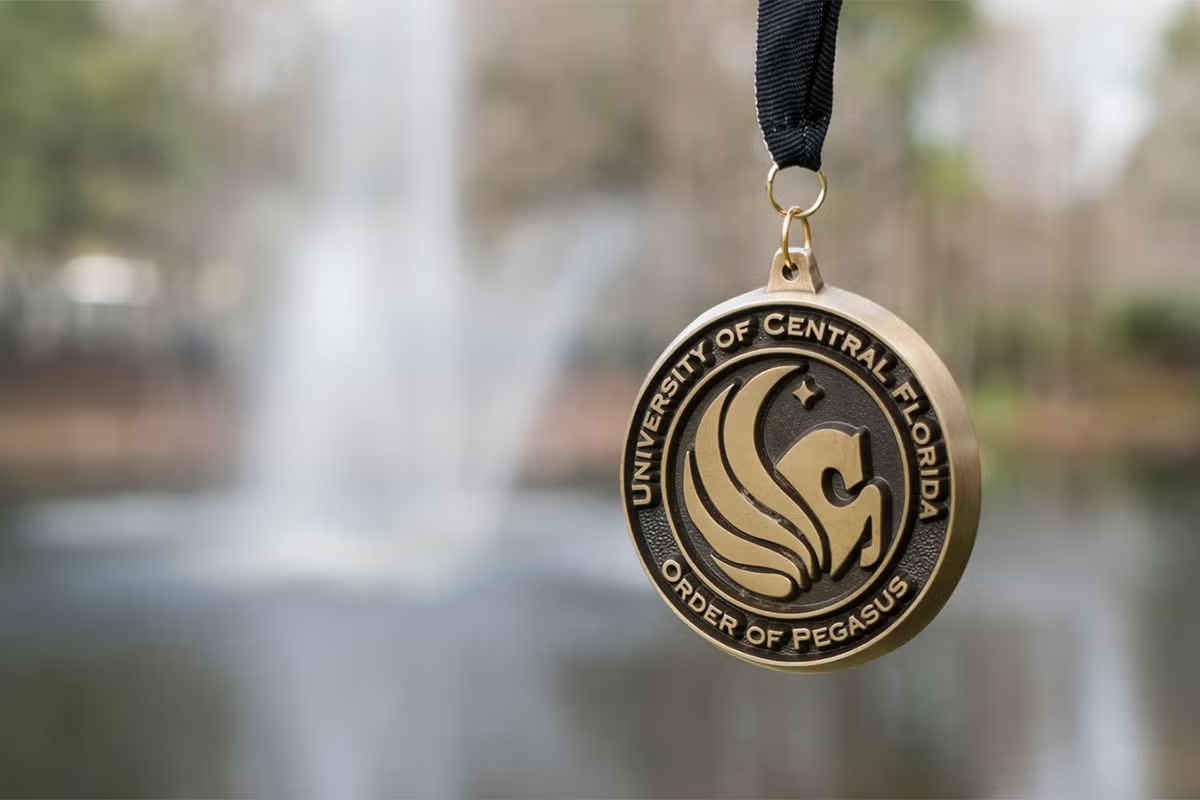
Maksim Godovykh was awarded the Order of Pegasus, the most significant and prestigious student honor at the University of Central Florida. The award recognizes exceptional academic achievement, leadership, and outstanding contributions to the university and broader community, placing recipients among the most accomplished graduates in UCF’s history.

During his time at UCF, Dr. Godovykh distinguished himself through interdisciplinary research, international projects, and active engagement in academic and professional communities. His work bridged research and practice, with a strong focus on understanding human behavior, experience design, and the societal impacts of tourism, hospitality, and events.

The Order of Pegasus reflects not only academic excellence, but also a sustained commitment to leadership and service. For Godovykh, the recognition underscores the value of combining rigorous research, real-world application, and global perspective in addressing complex challenges across industries.

Read more: https://graduate.ucf.edu/profile/maksim-godovykh

Categories
News

Global Hospitality Challenge

Maksim Godovykh was selected as a winner of the United Nations World Tourism Organization (UNWTO) Global Hospitality Challenge, an international initiative aimed at accelerating the recovery of global tourism while promoting inclusivity and sustainability. The challenge attracted hundreds of innovative projects from around the world, which were evaluated based on criteria such as disruptiveness, project maturity, implementation potential, scalability, digitalization, sustainability, and investment attractiveness.

Dr. Godovykh’s project, the “Virtual Hospitality Research Platform,” was recognized for its innovative technological approach and strong practical relevance for the tourism and hospitality industry. The platform enables industry practitioners to pretest new interventions, programs, marketing campaigns, and policy solutions in virtual environments before implementing them in real-world settings, reducing risk and increasing effectiveness.

As a result of winning the UNWTO Hospitality Challenge, Dr. Godovykh was invited to collaborate with international researchers, tourism providers, and decision-makers on further development of the platform. Through this collaboration, more than a dozen virtual hospitality scenarios were created for hotels, tourist destinations, events, online travel agencies, and sharing-economy providers, reinforcing the project’s global impact and contribution to innovation in sustainable tourism.

Categories
case

Case 7: Turning a Crisis into a Creative Solution while Organizing the First Startup Forum

1. Context: Identifying an Opportunity and Designing the Event

At the time, our region was experiencing a boom in technological startups—new teams, new products, and growing energy in the ecosystem. However, there was a clear gap:

  • Plenty of career fairs and employment-related events.
  • Almost no large-scale business development forums where founders, investors, banks, and service providers could meet in one place.

Seeing this opportunity, I decided to launch a major Startup Forum—the first event of its kind in our area.

I already led a team of about 20 experienced event organizers who regularly ran Career Forums. I proposed an idea to them:
even though the target audiences of a Career Forum and a Startup Forum are different, we could leverage the same infrastructure and run the events back-to-back.

Strategic Event Model

We came up with a strategy to maximize impact and minimize cost:

  1. Back-to-back events in the same venue
    • Day 1: Career Forum
    • Day 2: Startup Forum
    • Same venue, same booth structures, same meeting spaces, same stage.
  2. Cost optimization
    • Reuse:
      • Booth constructions
      • Branding structures
      • Contractor setup
      • Cleaning services
      • AV equipment
    • This dramatically reduced:
      • Setup and teardown labor
      • Logistics complexity
      • Total contractor and venue costs
  3. Business Model for Year One
    • Free entry for attendees, with prior registration on the website.
    • Revenue from:
      • Booth fees for startup-related exhibitors.
      • Sponsorship packages for:
        • Banks and financial institutions
        • Franchising companies
        • IT and SaaS providers
        • Any company interested in acquiring or serving small businesses and founders.
  4. Promotion and Partnerships
    • Government as a partner:
      • The event was supported and promoted through official channels.
      • We received broad pre-event publicity and institutional validation.
    • Cross-promotion with media:
      • Invitations and special access for business journals and media outlets.
      • This elevated the perceived status of the forum.
  5. Program and Speakers
    • We built a business program focused on:
      • Access to financing
      • Practical tools for early-stage founders
      • Legal, financial, and operational topics for small businesses.
    • My sales team successfully recruited paid speakers and partners from financial organizations and business service providers.
  6. Venue and Scale
    • We booked the largest venue in the region—a Sports and Convention Palace with a capacity of around 10,000 attendees.
    • For the first Startup Forum, we expected around 5,000 attendees.

I was personally in charge of everything:

  • Contractor coordination
  • Booth and layout planning
  • Financial model and budgets
  • Sponsorship and partner relationships
  • Overall risk and decision-making

The event was fully set up. Exhibitors had arrived from different regions. The program was locked, the booths were built, and registration numbers were strong.

Then, one hour before the official start, the crisis hit.


2. The Problem: A Full-Scale Infrastructure Failure One Hour Before Start

With roughly 5,000 attendees expected to arrive within the hour, I received a call from the venue director:

  • Water supply and sewage were completely shut down.
  • This was not a minor technical glitch; the entire building and the surrounding district had lost water and canalization.
  • The venue director’s immediate conclusion:
    “You must cancel the event.”

From a standard operations point of view, that decision was logical:

  • Thousands of people in a venue with no working toilets, no running water, no sanitation.
  • Obvious health, safety, and comfort concerns.
  • No quick fix from city services.

But from the organizer’s point of view, cancelling meant:

  • Total sunk costs:
    • Booth construction
    • Contractor work
    • Venue rental
    • Marketing and promotion
  • Lost travel and preparation for:
    • Exhibitors from other regions
    • Speakers with prepared sessions
    • Attendees who had committed their time
  • Reputational damage:
    • First-ever Startup Forum labeled as “cancelled at the last minute”.
    • Loss of trust from sponsors, government partners, and media.

I quickly did the mental math:

  • If we cancelled, we lost nearly everything, both financially and strategically.
  • If we proceeded recklessly, we risked a chaotic, uncomfortable experience and possible complaints.

This was a classic high-stakes constraint problem:

How to host a large-scale event in a huge venue, with thousands of attendees, in a building that suddenly has no water or sewage — and do it safely, transparently, and respectfully?

I decided that cancellation was the last resort. Instead, I focused on finding a way to adapt.


3. The Solution: Rapid, Creative Reconfiguration of Basic Infrastructure

To keep the event alive, I needed to rebuild the minimum necessary infrastructure—in under an hour.

3.1. Negotiating to Keep the Doors Open

First, I had to convince the venue director not to cancel immediately.

  • I acknowledged the seriousness of the situation.
  • I presented a rapid-action plan:
    • Replace unusable bathrooms with portable and chemical toilets.
    • Control information and expectations through transparent communication.
    • Ensure that attendees, staff, and speakers understood the situation and temporary workaround.

I took full responsibility for:

  • Additional costs
  • Logistics
  • Reputation management with attendees and partners

With a clear emergency plan and ownership, I persuaded the director to allow the event to continue while we rushed to implement alternatives.


3.2. Emergency Logistics: Rebuilding Sanitation in Real Time

I immediately mobilized my team and our budget:

  1. Buying all available chemical toilets locally
    • I personally went to the nearest suppliers and purchased every chemical toilet unit they had in stock, including higher-end cabins that we jokingly called our “VIP cabins.”
    • This ensured:
      • Immediate availability
      • At least some baseline coverage for early arrivals
  2. Deploying portable toilets at any cost
    • I instructed my team:
      • “Order every available portable toilet from rental companies. Don’t negotiate too long on price—speed is more important.”
    • We arranged for portable units to be delivered and installed around the building, near the main entrances and convenient access points.
  3. Hygiene Measures
    • We improvised a sanitation kit strategy:
      • Purchased large quantities of wet wipes and paper towels.
      • Brought in alcohol-based sanitizers and hygiene stations wherever possible.
    • The idea was to compensate for the lack of running water with a combination of:
      • Chemical toilets
      • Surface wipes
      • Hand sanitizing options

We essentially built a temporary, parallel sanitation system outside and around the venue in less than an hour.


3.3. Communication and Expectation Management

Technical work alone wouldn’t be enough. With 5,000 attendees and high-profile participants, we needed clear, honest communication to avoid confusion or panic.

  1. Briefing with Speakers and Partners
    • I quickly gathered all key speakers and session hosts.
    • I explained:
      • The cause of the issue (district-wide outage, not event mismanagement).
      • The temporary solutions put in place (chemical and portable toilets, hygiene supplies).
      • How I needed them to help:
        • Calmly acknowledge the situation at the start of their sessions.
        • Reassure attendees that solutions were in place.
        • Emphasize our commitment to running the event despite external infrastructure failure.
  2. Addressing Attendees Directly
    • Before the official start, I made a main-stage announcement:
      • Explained the emergency situation honestly.
      • Stated clearly that:
        • We had installed temporary sanitation facilities outside and around the venue.
        • Additional hygiene materials were available.
      • Thanked everyone in advance for their understanding and flexibility.
      • Reframed the situation slightly:
        • “Today we are startups in every sense — we’re launching something new and also solving unexpected problems in real time.”
  3. Signage and Staff Instructions
    • We placed visible signs directing attendees to the portable and chemical toilets.
    • Staff and volunteers were instructed to:
      • Proactively guide people to the new facilities.
      • Answer questions calmly.
      • Keep communication consistent and reassuring.

3.4. Outcome and Learnings

Despite the infrastructure crisis, we successfully:

  • Ran the Startup Forum as planned, without last-minute cancellation.
  • Hosted thousands of attendees in a safe, managed, and transparent way.
  • Maintained trust with:
    • Sponsors
    • Government partners
    • Media
    • Exhibitors and attendees

People understood that a district-wide outage was beyond our control, but they also saw:

  • Our speed of response
  • Our willingness to spend extra to keep the event viable
  • Our ability to coordinate a large team under intense time pressure

In many ways, the situation reinforced the event’s brand:

  • A forum for startups that itself behaved like a startup:
    • Faced a severe constraint.
    • Refused to give up.
    • Designed and shipped a workaround under brutal time pressure.

Key lessons I took away:

  1. Risk planning must include “physical infrastructure” failures.
    Water, power, and basic building services are usually taken for granted—but they shouldn’t be.
  2. Relationships with venue management matter.
    If I hadn’t built trust and taken responsibility, the director would likely have insisted on cancellation.
  3. In a crisis, speed + clarity beat perfection.
    We didn’t have time to design a beautiful solution; we had to design a functional one, communicate clearly, and move.
  4. Honesty with attendees builds goodwill.
    Rather than hiding the problem, we shared it and showed our solution. People appreciated the transparency.

Summary

This case illustrates not only how I conceived and launched a first-of-its-kind Startup Forum by cleverly leveraging existing Career Forum infrastructure, but also how I handled a severe, last-minute operational crisis:

  • Context:
    • Identified a gap in the regional startup ecosystem.
    • Designed a scalable, cost-efficient event model with a strong business plan and partnerships.
  • Problem:
    • One hour before opening, a district-wide water and sewage outage threatened to shut down the event completely.
  • Solution:
    • Negotiated with the venue not to cancel.
    • Rapidly rebuilt minimum sanitation infrastructure using chemical toilets, portable units, and hygiene supplies.
    • Communicated clearly with speakers and attendees, transforming a potential disaster into a story of resilience and resourcefulness.

The Startup Forum not only took place—it also demonstrated in real time the entrepreneurial mindset the event was designed to celebrate: seeing constraints not as a reason to stop, but as a challenge to solve creatively and decisively.

Categories
News

National Best Business Event Award

Maksim Godovykh has received the Grand Prix of the National Russian Event Award, one of the country’s most prestigious honors in the field of event tourism and business events. The award is granted through an open national competition recognizing outstanding achievements in the development of event tourism, with more than 600 projects from over 60 regions participating each year.

Dr. Godovykh was awarded the Grand Prix in the category of top business-oriented projects for the organization of the annual international on-the-water “Volga Boat Show.” The jury highlighted the project’s innovative format, strong industry impact, and contribution to positioning the country on the international yachting and boat show map.

As the founder and director of the Volga Boat Show, Dr. Godovykh was subsequently invited to represent Russia within the International Federation of Boat Show Organizers (IFBSO) and to present at the International Congress of Yacht Show Organizers. This recognition further reinforced the Volga Boat Show’s status as a flagship international event and underscored Godovykh’s role as a leader in the global event and maritime exhibition industry.

Categories
News

Volga Boat Show

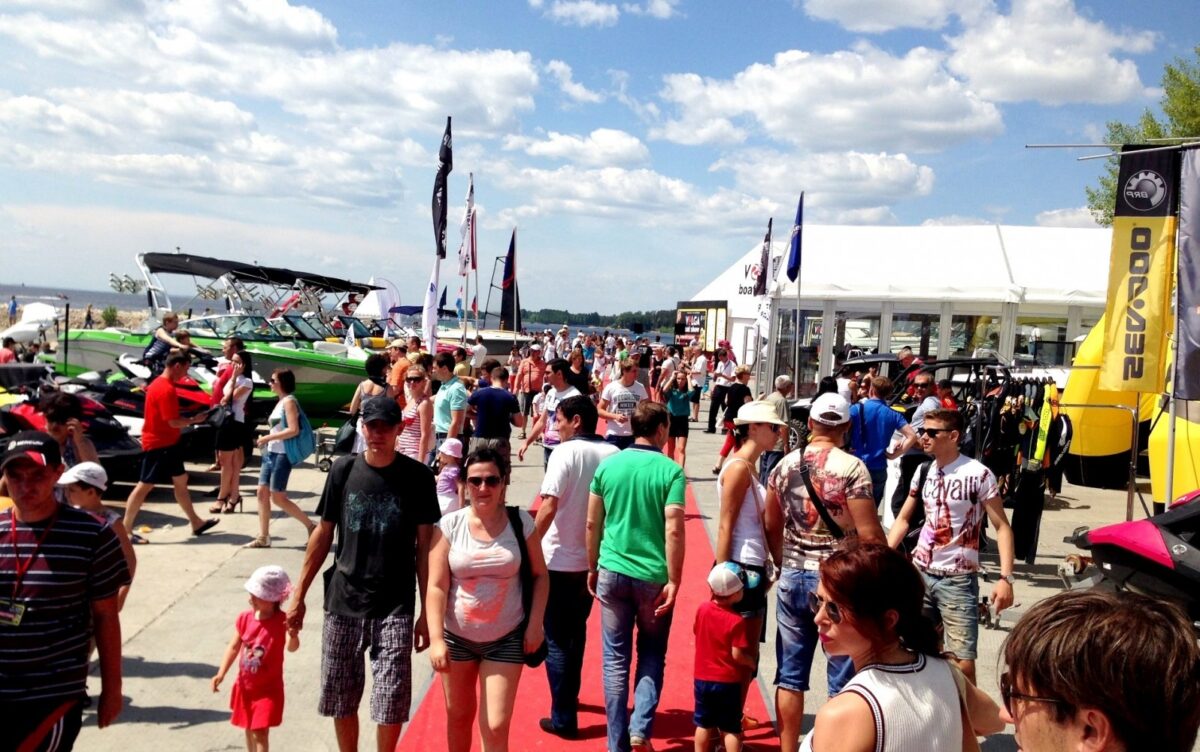
The Volga Boat Show has grown into a recognized international forum, bringing together more than 130 manufacturers, dealers, and service providers from multiple countries. Its unique on-water format allows visitors to see vessels in action through live test drives, while also offering educational and family-oriented programming, including workshops, seminars, and demonstrations. This combination of business, education, and hands-on experience has made the show attractive to both industry professionals and the wider public.

Maksim Godovykh, owner and organizer of the Volga Boat Show, has positioned the event not simply as an exhibition, but as a strategic platform for developing the yachting and small-vessel industry. From its inception, the Volga Boat Show was designed to localize both national and international production, following extensive preparatory work that included presenting the project at major global exhibitions and engaging directly with manufacturers across Europe.

According to Godovykh, the project is guided by three long-term goals: the annual organization of the Volga Boat Show, the development of a dedicated yachting industry forum, and the hosting of the yacht design competition, which has already attracted dozens of high-quality project submissions. The success of this integrated approach has been recognized at the national level, with the Volga Boat Show receiving multiple prestigious awards in the events industry and being widely acknowledged as a flagship project.